Content Menu
● How These Suppliers Were Selected
>> Important Evidence Limitations
● Why Source Private-Label Leather Belts from China?
● Ferragamo Belt Replica Vs Real: What Buyers Should Actually Compare
>> A Practical Material Specification
● Comparison Table: Ten Chinese Belt-Sourcing Candidates
● The List: Ten Suppliers to Evaluate
>> 1. Luxurry Edit — A Buyer-Nominated Candidate for a Development-Led Brief
>> 2. Hong Bang Leather — A Candidate for Smaller Custom Programs
>> 3. YSK Leather Goods — A Candidate for Structured Repeat Orders
>> 4. J.D. Belt Factory — A Candidate for Multi-Location Production
>> 5. Guangzhou Deconn Leather Industry Limited — A Candidate with Published Export Experience
>> 6. Cossroll Leather — A Candidate for Coordinated Accessories Collections
>> 7. Hangzhou Hongmioo Industrial — A Candidate for Mixed-Material Belt Ranges
>> 8. Dongguan Zhengyong Leather Accessories — A Candidate for Hardware-Integrated Development
>> 9. HongDing — A Candidate for Broad Belt-Category Coverage
>> 10. Guangzhou Jiaye Leather — An Additional Candidate Requiring Primary Verification
● Technical Quality: What a Belt Specification Should Control
>> Material Description Must Extend Beyond the Surface
>> Hardware Needs Its Own Approval Process
>> CE and RoHS Are Not Generic Belt Certifications
● An Overlooked Procurement Trap: A Low Assembly MOQ Can Hide Higher Component Minimums
● Buyer’s Guide: From Shortlist to Repeat Orders
>> Step 1: Verify the Contracting Entity
>> Step 2: Send the Same Technical Brief to Every Candidate
>> Step 3: Use Staged Sampling
>> Step 4: Define Defects Before Inspection
>> Step 5: Make Logistics Responsibilities Explicit
● Conclusion: Choose a Documented Manufacturing Partner
● FAQs
>> 1. How Can We Check Whether a Supplier’s ISO Certificate Has Expired or Been Suspended?
>> 2. Can a Factory Prove That a Belt Is Authentic Ferragamo by Showing Similar Materials or Packaging?
>> 3. How Do We Reduce the Risk of Material Substitution After Sample Approval?
>> 4. Is “REACH Compliant” Enough Without a Product-Specific Report?
>> 5. How Can We Tell Whether Advertised Capacity Is Actually Available?
A search for “Ferragamo Belt Replica Vs Real manufacturers in China” often combines two different purchasing objectives: understanding how imitation belts differ from authentic products and finding a capable factory for premium private-label belts.
Professional buyers should separate those objectives before contacting suppliers. Ferragamo directs customers seeking authentic products to its website, authorized stores, and distributors, and states that it actively pursues imitation and counterfeiting. None of the Chinese suppliers in this guide has been verified as an authorized Ferragamo manufacturer. Their inclusion must not be interpreted as evidence of authorization or involvement in replica production.
For buyers developing their own collections, the commercially useful question is therefore more precise: which suppliers can manufacture well-specified leather belts, support original designs, maintain consistent production, and provide documentation appropriate to the destination market?
This guide evaluates ten sourcing candidates through that lens. It distinguishes published supplier claims from independently established facts and identifies the information buyers still need before placing an order.
How These Suppliers Were Selected
A credible supplier shortlist should begin with verification, not photographs, promotional rankings, or an attractive sample.
The following assessment framework is proposed for procurement teams comparing factories. It is not a claim that every company below has completed an independent audit.
| Assessment area | Suggested weighting | Evidence to request |
|---|---|---|
| Material transparency and traceability | 25% | Component-level material specification, leather source, batch records |
| Quality control and testing | 25% | Inspection procedures, defect definitions, relevant laboratory reports |
| Development and customization | 20% | Technical drawings, sampling workflow, original hardware development |
| Production and delivery reliability | 15% | Line allocation, production schedule, comparable order history |
| Commercial clarity and communication | 15% | Itemized quotation, change-control procedure, response ownership |
Intellectual-property clearance should operate as a prerequisite rather than a weighted advantage. A supplier’s technical ability to reproduce a product does not establish the buyer’s right to manufacture or sell that design.
Important Evidence Limitations
This article is a research-based shortlist, not an audited league table. Supplier websites and marketplace profiles provide useful starting points, but their figures remain supplier-reported unless independently checked.
Luxurry Edit appears first because this article was commissioned for the company, not because an independent comparison established first-place performance. Its supplied description emphasizes manufacturing experience and consistent production quality. However, the provided About Us page could not be retrieved during research, so its establishment year, production capacity, MOQ, certifications, and OEM development resources remain unverified.
Where information is missing, this guide says so instead of supplying an estimated number.
Why Source Private-Label Leather Belts from China?
China’s leather supply chain includes raw-material processing, leather-goods development, accessories manufacturing, and export-oriented production. The supplier evidence reviewed for this guide shows a particular concentration of leather-goods businesses in Guangzhou and Dongguan, giving buyers several Guangdong-based options for comparative sampling.
Industry scale also matters. A 2025 All China Leather Exhibition market update, citing the China Leather Industry Association, reported that China imported:
- 1.49 million tonnes of raw hides and skins in 2024, valued at USD 1.34 billion.
- 618,000 tonnes of semi-finished leather, valued at USD 1.03 billion.
- Approximately 2.108 million tonnes across those two categories, worth USD 2.37 billion combined.
These figures describe upstream leather inputs—not belt exports, luxury-belt production, or the output of individual factories. The distinction matters: large national trade volumes do not prove that a particular supplier can deliver a demanding belt specification.
The same 2025 industry update discusses OEM, ODM, and own-brand manufacturers participating in China’s leather ecosystem. For purchasing managers, that creates opportunities to compare different business models rather than assuming every exporter owns the entire production process.
Ferragamo Belt Replica Vs Real: What Buyers Should Actually Compare
Authenticity and manufacturing quality are separate questions.
Ferragamo identifies its authorized sales channels as the route for ensuring authentic purchases. A convincing buckle, neatly printed box, or premium leather sample should not replace documented provenance.
For an independently branded belt, buyers should instead establish measurable construction requirements.
| Evaluation point | Authentic-brand purchasing question | Private-label manufacturing question |
|---|---|---|
| Product identity | Is the seller an authorized source? | Do we own or have permission to use the design and branding? |
| Leather | What does the specific official product description state? | What are the face, lining, reinforcement, and backing materials? |
| Buckle | Does provenance support authenticity? | What alloy, coating, fastening method, and dimensions are specified? |
| Construction | Does the item match its documented model? | What tolerances govern thickness, stitching, edges, and hole spacing? |
| Documentation | Is there a traceable purchase history? | Are the specification, inspection record, and test reports traceable? |
| Packaging | Does it accompany a legitimate purchase? | Is it original, correctly labeled, and suitable for transport? |
This framework avoids a common mistake: treating visual similarity as evidence of either authenticity or repeatable factory quality.
A Practical Material Specification
Instead of writing “premium genuine leather” on a purchase order, require the supplier to complete a component-level bill of materials:
- Face material and leather type.
- Lining material.
- Internal reinforcement or filler.
- Finished thickness and allowable variation.
- Surface coating and color reference.
- Edge finishing system.
- Buckle material and coating.
- Adhesive specification where relevant.
- Packaging materials and labeling.
These are proposed purchasing controls. The final specification should reflect the intended price point, destination market, and performance requirements.
Comparison Table: Ten Chinese Belt-Sourcing Candidates
“Not verified” means the available evidence did not establish the point. It does not mean the supplier lacks the capability.
Capacity figures should not be compared without confirming whether they cover belts only, multiple product categories, or an entire manufacturing network.
| Supplier | Published operating history | Capacity information | MOQ information | Certification or testing evidence |
|---|---|---|---|---|
| Luxurry Edit | Establishment year not verified | Not verified | Not verified | Not verified |
| Hong Bang Leather | Claims 30+ years of experience; legal founding year not established | Not established in reviewed page | Many projects reportedly start around 50–200 pieces per style; negotiable | Current documents require verification. |
| YSK Leather Goods | Claims 15+ years of experience | Advertises 100,000-piece monthly program capacity; scope requires confirmation | Typical programs 300–5,000+ pieces; 100-piece validation runs considered | Publishes AQL 1.0 QC claims; supporting documents require review. |
| J.D. Belt Factory | Claims 20+ years of belt development and manufacturing | Three factories advertised across China and Cambodia; output not established | Quotation required | Current certificates require verification. |
| Guangzhou Deconn Leather Industry Limited | Profile states established in 2010 | Not established | Quotation required | Profile claims SGS and BV audits; obtain current reports. |
| Cossroll Leather | Website states established in 2002 | Reports 100 employees; belt output not established | Quotation required | Current certificates require verification. |
| Hangzhou Hongmioo Industrial | Claims over a decade of experience; exact founding year not established | Advertises 1,000–3,000 m² premises; output not established | Quotation required | Profile describes QC resources; current documents require review. |
| Dongguan Zhengyong Leather Accessories | Profile describes approximately 20 years of experience; exact founding year not established | Guangdong operations and a Guizhou industrial base described | Advertises 100 pieces | Claims a BV-certified in-house laboratory; scope and validity require checking. |
| HongDing | Founding year not established | Not established | Quotation required | Not established in reviewed evidence. |
| Guangzhou Jiaye Leather | Secondary directory states established in 2008 | Not established | Quotation required | Not established in reviewed evidence. |
The List: Ten Suppliers to Evaluate
1. Luxurry Edit — A Buyer-Nominated Candidate for a Development-Led Brief
Luxurry Edit describes its business as supplying high-end handbags, footwear, clothing, and accessories inspired by established luxury brands. The company-provided brief emphasizes manufacturing experience, detailed workmanship, and consistent production.
For a buyer-led shortlist, its proposed positioning is accessible premium development for smaller brands. That positioning should be demonstrated through original-design projects rather than assumed from promotional language.
- Establishment year: not independently verified.
- Main markets: not independently verified.
- Core strength described by the company: product detailing and production consistency.
- OEM/ODM scope: private-label belt development, original hardware, packaging, and specification support require written confirmation.
A useful first evaluation would ask Luxurry Edit to demonstrate communication efficiency through an itemized quotation, a documented revision process, and one clearly assigned project contact.
Smaller brands should also request separate minimums for straps, custom buckles, colors, and packaging. This will reveal whether the proposed flexibility extends beyond the finished-belt assembly stage.
Its first-place presentation here reflects the commissioning brief. Claims of superior value, extensive research capability, or deep OEM support should not be published as established facts until supporting evidence is available.
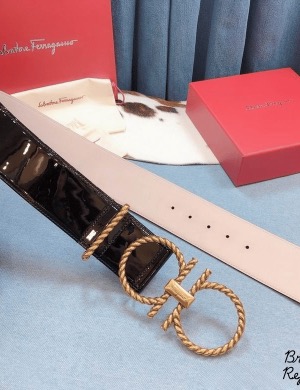
2. Hong Bang Leather — A Candidate for Smaller Custom Programs
Hong Bang Leather advertises OEM, ODM, and private-label belt manufacturing, including material selection, custom hardware, branding, and packaging. Its website states that many custom projects begin around 50–200 pieces per style, while emphasizing that minimums depend on the specification.
- Establishment year: not established; the company claims 30+ years of experience.
- Main markets: not established in the reviewed page.
- Core strength: a published customization offer with negotiable project minimums.
- OEM/ODM scope: development from technical packs, drawings, or samples, alongside material and hardware customization.
For buyers testing a collection, this makes Hong Bang a relevant quotation candidate. However, request written confirmation that the quoted minimum includes the chosen buckle, leather color, size assortment, and packaging—not merely a standard stock configuration.
3. YSK Leather Goods — A Candidate for Structured Repeat Orders
YSK publishes comparatively detailed program information. Its website describes a 4,000 m² Guangzhou facility, approximately 80 workers, 100,000-piece monthly program capacity, and a seven-stage inspection process associated with an AQL 1.0 claim. These remain company-reported figures.
- Establishment year: not established; the company claims more than 15 years of experience.
- Main markets: states it serves buyers in 30+ countries and has experience supplying Japanese brands.
- Core strength: clearly described order scales and inspection positioning.
- OEM/ODM scope: men’s and women’s belts, reversible constructions, embossing, and customized products.
Typical advertised programs run from 300 to 5,000+ units per style, with 100-unit validation runs considered for qualified projects. Buyers should clarify whether the advertised monthly capacity is belt-specific and what quantity can actually be reserved for their order.
4. J.D. Belt Factory — A Candidate for Multi-Location Production
J.D. Belt Factory states that it operates three factories across Dongguan, Sichuan, and Cambodia, supported by more than 20 years of belt development and manufacturing experience. Its published offer includes genuine leather, PU, webbing, and other belt categories.
- Establishment year: not established in the reviewed material.
- Main markets: describes serving customers worldwide; regional revenue distribution is not published.
- Core strength: a multi-location production model and full-package development offer.
- OEM/ODM scope: patterns, samples, sourcing, manufacturing, and private-label programs based on buyer specifications.
For procurement teams, the key issue is production-location control. Ask which factory will make the approved sample, which will manufacture the bulk order, and whether any production transfer requires written approval.
5. Guangzhou Deconn Leather Industry Limited — A Candidate with Published Export Experience
Deconn’s marketplace profile states that the company was established in 2010 and supplies belts, wallets, suspenders, and related accessories. It reports exports to more than 20 countries across Europe, America, Australia, and Asia.
- Establishment year: 2010, according to its supplier profile.
- Main markets: the regions listed above; sales proportions are not established.
- Core strength: a leather-accessories offer supported by stated export experience.
- OEM/ODM scope: OEM services are advertised; detailed ODM responsibilities require confirmation.
The profile also references SGS and BV audits. Buyers should request the actual reports, confirm the audited legal entity and address, and distinguish a factory audit from a product test or management-system certificate.
6. Cossroll Leather — A Candidate for Coordinated Accessories Collections
Cossroll’s website states that the business was established in 2002 and combines development, production, and sales. It advertises customized wallets, bags, belts, and other leather goods, alongside OEM and ODM services.
- Establishment year: 2002, according to the company.
- Main markets: cross-border merchants are mentioned, but geographic sales distribution is not established.
- Core strength: a broad leather-goods range suitable for evaluating coordinated collections.
- OEM/ODM scope: custom leather accessories, sampling, and development services.
Buyers considering matching belts and wallets should compare approved color standards and surface finishes across products. They should also confirm how much of Cossroll’s workforce and equipment is allocated to belts rather than assuming that total-company resources equal belt capacity.
7. Hangzhou Hongmioo Industrial — A Candidate for Mixed-Material Belt Ranges
Hongmioo’s supplier profile describes an OEM/ODM business offering genuine leather, PU, fabric, knitted belts, and suspenders. It states that it has more than a decade of experience, a development center, and a quality-control department.
- Establishment year: not established from the reviewed evidence.
- Main markets: described as worldwide; a regional breakdown is unavailable.
- Core strength: breadth across leather and non-leather belt categories.
- OEM/ODM scope: customized belts and accessories.
This range may suit buyers comparing several material routes within one collection. Ask whether each construction is manufactured in-house and request material-specific samples rather than treating one successful leather sample as proof of competence across every category.
8. Dongguan Zhengyong Leather Accessories — A Candidate for Hardware-Integrated Development
Zhengyong’s supplier profile, associated with the JANYO name, describes belt, bag, and accessory manufacturing. It states that an in-house hardware factory was established in 2015 and advertises a 100-piece MOQ, 3D development support, and a testing laboratory.
- Establishment year: not established; the profile describes approximately 20 years of experience.
- Main markets: not established in the reviewed profile.
- Core strength: the claimed integration of leather accessories and hardware development.
- OEM/ODM scope: belts, bags, and related customized accessories, with 3D development support advertised.
The profile gives sample and delivery lead-time claims, but buyers should obtain project-specific schedules. Original buckle tooling, coating trials, and material approvals should appear as separate milestones rather than being hidden inside one headline lead time.
9. HongDing — A Candidate for Broad Belt-Category Coverage
HongDing presents itself as a custom belt manufacturer serving brands, retailers, and wholesalers. Its published range includes leather, PU, woven, and specialty belts, with support described from development through bulk production.
- Establishment year: not established.
- Main markets: buyer categories are identified, but geographic markets are not established.
- Core strength: a broad belt-category offer.
- OEM/ODM scope: custom development and bulk production are advertised; the exact division of design responsibilities requires confirmation.
Because the reviewed evidence contains limited operational figures, begin with entity verification, a capability interview, and a paid development sample. Public information is not sufficient to rank its capacity or delivery performance against the more extensively documented candidates.
10. Guangzhou Jiaye Leather — An Additional Candidate Requiring Primary Verification
A secondary supplier directory identifies Guangzhou Jiaye Leather as established in 2008 and lists genuine leather belts, wallets, handbags, and backpacks among its products. The directory describes research, development, production, and sales activities.
- Establishment year: 2008, according to a secondary source.
- Main markets: not established.
- Core strength: a reported multi-category leather-goods offer.
- OEM/ODM scope: development and production are described, but belt-specific customization capabilities need primary confirmation.
This entry has a weaker evidence base than suppliers with detailed first-party information. Treat it as an additional sourcing lead, not an equally validated recommendation. Obtain its business license, factory address, current product references, and direct quotation before including it in a final tender.
Technical Quality: What a Belt Specification Should Control
Material Description Must Extend Beyond the Surface
A procurement specification should distinguish every structural layer. Terms such as “genuine leather” do not provide the buyer with a complete account of the finished belt’s construction.
Require a cross-sectional sample and a signed bill of materials. If alternative materials are offered, evaluate them as separate constructions with separate prices and acceptance criteria.
Suggested sample checks include:
- Cut-section inspection against the declared construction.
- Thickness measurements at agreed positions.
- Dry and wet rubbing evaluation.
- Repeated bending around a defined radius.
- Hole deformation and buckle-attachment checks.
- Comparison of approved and production-stage samples.
These are proposed controls, not universal pass/fail thresholds. Define methods, conditioning, and acceptance limits before testing.
Hardware Needs Its Own Approval Process
A visually attractive buckle is not a complete hardware specification.
Ask suppliers to document:
- Base material.
- Dimensions and weight range.
- Surface preparation and coating system.
- Color reference.
- Fastening design.
- Functional checks.
- Relevant chemical-testing requirements.
Keep an approved hardware sample separately from the assembled belt. This makes it easier to identify whether a later change came from the metal component, coating process, or assembly operation.
CE and RoHS Are Not Generic Belt Certifications
Ordinary fashion belts should not be promoted as higher-quality products simply because a supplier offers a “CE certificate.” The European Union states that CE marking applies only where relevant harmonized legislation requires it, and that it must not be used where no such requirement exists.
RoHS addresses electrical and electronic equipment; it is not a general environmental certification for conventional leather belts. A conventional belt’s compliance assessment should instead be matched to its materials, use, and destination market.
For leather and metal components, relevant chemical-risk questions can include chromium VI, restricted aromatic amines from certain azo dyes, and nickel release where the applicable conditions are met. ECHA and leather-industry guidance discuss these restrictions and the importance of material-specific assessment.
Ask a qualified laboratory to define the applicable testing scope rather than ordering an unrelated certificate package.
An Overlooked Procurement Trap: A Low Assembly MOQ Can Hide Higher Component Minimums
A finished-belt quotation may appear flexible while the commercial commitment sits elsewhere.
For example, a buyer might approve a small pilot order but discover that original buckle tooling, a custom coating color, or printed packaging requires purchasing additional components.
This is a contract-review risk to investigate—not a claim that any supplier listed here follows that practice.
Before paying a deposit, require separate answers for:
- Finished-belt MOQ.
- MOQ per leather color.
- MOQ per buckle design and finish.
- Packaging minimums.
- Tooling charges and ownership.
- Ownership of unused components.
- Storage period and storage fees.
- Permission to use the tooling for other customers.
The practical safeguard is an itemized development agreement. A low finished-product minimum has limited value if the buyer unknowingly funds a much larger component inventory.
Buyer’s Guide: From Shortlist to Repeat Orders
Step 1: Verify the Contracting Entity
Request the supplier’s business license and compare the legal name across the quotation, contract, invoice, and payment instructions.
If the seller and factory are different entities, ask for a written explanation of their relationship and responsibility for quality claims.
Step 2: Send the Same Technical Brief to Every Candidate
A comparable tender should specify:
- Intended market and use.
- Original design files.
- Component-level construction.
- Dimensions and tolerances.
- Size assortment.
- Packaging.
- Testing expectations.
- Forecast order quantities.
- Required delivery window.
Without a common brief, one supplier may quote a different material or construction while appearing cheaper.
Step 3: Use Staged Sampling
A practical approval sequence is:
- Development sample.
- Material and hardware approval.
- Revised functional sample.
- Pre-production sample.
- Pilot production where appropriate.
- Bulk inspection against retained references.
Keep a signed reference sample with the buyer and the supplier. Record any approved deviations in writing.
Step 4: Define Defects Before Inspection
Photographs alone leave too much room for disagreement.
Create an inspection sheet addressing scratches, edge finish, stitching, color variation, hole alignment, buckle operation, dimensions, and labeling.
If a supplier advertises an AQL value, request the full inspection plan. For example, YSK publishes an AQL 1.0 claim, but buyers still need the inspection level, defect categories, and lot-specific acceptance rules to understand how it applies.
Step 5: Make Logistics Responsibilities Explicit
Ask the supplier and forwarder to document:
- The agreed trade term.
- Freight and insurance responsibilities.
- Export and import documentation.
- Proposed customs classification.
- Actual country of manufacture.
- Carton dimensions and weights.
- Moisture-management arrangements.
- Treatment of split shipments.
- Claims procedures for transit damage.
For suppliers operating across countries, confirm the production location before shipment. J.D., for example, advertises facilities in both China and Cambodia; its network should not be mistaken for a guarantee that every order has the same manufacturing origin.
Conclusion: Choose a Documented Manufacturing Partner
The useful outcome of a “Ferragamo Belt Replica Vs Real” search is not a list of factories claiming the closest visual imitation. It is a clearer distinction between authentic branded purchasing and independently branded manufacturing.
For private-label sourcing, compare documented construction, development support, available capacity, inspection controls, and market-specific compliance. Treat missing information as a due-diligence task rather than filling the gaps with promotional assumptions.
Luxurry Edit can begin that evaluation by inviting buyers to submit an original belt brief, target quantity, destination market, and packaging requirements. The appropriate next step is a written feasibility response and a documented sample program—not an unsupported promise of identical quality.
FAQs
1. How Can We Check Whether a Supplier’s ISO Certificate Has Expired or Been Suspended?
Start with the certificate number, legal entity, site address, standard, scope, issuing body, and validity dates.
Use IAF CertSearch where applicable and confirm uncertain records directly with the issuing certification body. The platform supports searches by company or certificate details and provides certificate-status verification. A PDF supplied by the factory should not be the only evidence reviewed.
Also check whether the certificate’s scope covers the relevant production activity and location—not merely an associated trading company.
2. Can a Factory Prove That a Belt Is Authentic Ferragamo by Showing Similar Materials or Packaging?
No. Materials and packaging are not a substitute for authorized provenance.
Ferragamo directs buyers to its official website, authorized stores, and distributors to ensure authenticity. A supplier’s ability to manufacture a visually similar item does not establish brand authorization.
For private-label projects, use original branding and obtain appropriate advice where a proposed design may overlap with protected elements.
3. How Do We Reduce the Risk of Material Substitution After Sample Approval?
Make the approved construction part of the contract.
Retain a cross-sectional reference, identify the materials in the bill of materials, require written approval for substitutions, and inspect production-stage units rather than relying only on the development sample.
If traceability is important to the project, require material-batch records and agree on how selected production samples will be tested.
4. Is “REACH Compliant” Enough Without a Product-Specific Report?
No procurement decision should rely on that phrase alone.
Request the report’s sample description, material and color identification, test date, methods, laboratory details, and results. Then establish whether the tested specimen represents the product being ordered.
Leather, dyes, and metal components can raise different restriction questions, so one report should not automatically be treated as covering every material and finish in a collection.
5. How Can We Tell Whether Advertised Capacity Is Actually Available?
Ask the supplier to distinguish total theoretical output, recent actual output, current bookings, and capacity reserved for your purchase order.
Request a dated production plan showing material readiness, line allocation, inspection, rework allowance, and shipment preparation.
Published figures are useful screening information, not delivery guarantees. YSK’s advertised monthly program capacity, for example, should be clarified for product scope and available allocation before it becomes a purchasing assumption.
References
The following resources support further checks. The 2025 exhibition update contains the clearly attributed industry figures used in this article; those figures cover 2024 raw-material imports, not 2025 or 2026 belt exports. https://www.aclechina.com/en/all-china-leather-exhibition-2025-chinese-leather-market-drives-demand/
1. China Leather Industry Association: www.chinaleather.org/en — association website identified in its industry listing. https://www.worldfootwear.com/organizations/clia-china-leather-industry-association/341.html
2. All China Leather Exhibition, 2025 market update: https://www.aclechina.com/en/all-china-leather-exhibition-2025-chinese-leather-market-drives-demand/ — industry context and CLIA-attributed import data.
3. Ferragamo brand protection: https://www.ferragamo.com/shop/us/en/sf/brand-protection — official authenticity and authorized-channel guidance.
4. European Union CE-marking guidance: https://europa.eu/youreurope/business/product-requirements/labels-markings/ce-marking/index_en.htm — official explanation of when CE marking applies.
5. IAF CertSearch: https://www.iafcertsearch.org/ — accredited management-system certificate verification.
Hot Tags: Ferragamo Belt Replica Vs Real, Leather Belt Manufacturers In China, OEM Leather Belt Manufacturers, ODM Belt Manufacturers, Private Label Leather Belts, Custom Leather Belt Manufacturers, Wholesale Leather Belt Suppliers, Genuine Leather Belt Manufacturers, Custom Belt Buckle Manufacturers, Low MOQ Belt Manufacturers