Content Menu
● What Are 1:1 Replica Bags and Standard Replica Bags?
>> What Does “1:1 Replica” Mean?
>> What Does “Standard Replica” Mean?
>> Replica, Inspired Design, and Authentic Product Are Different Concepts
● 1:1 Replica Bags vs Standard Replica Bags: Comparison Table
● Materials: Compare Specifications, Not Luxury-Sounding Language
>> Ask What the Bag Is Actually Made From
>> Separate Material Quality From Responsible-Sourcing Claims
● Construction: Look Beyond the Front-Facing Photograph
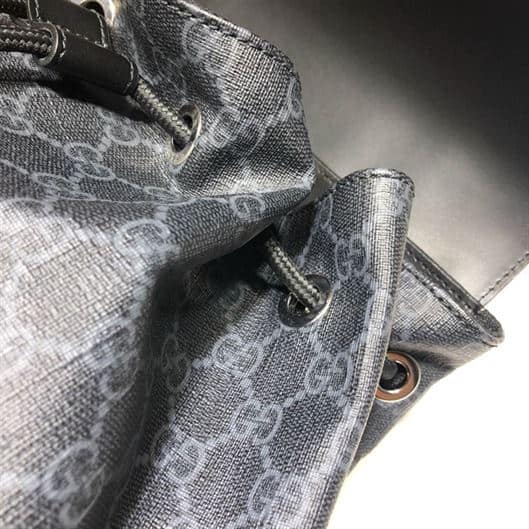
>> Inspect the Bag as a Functional Object
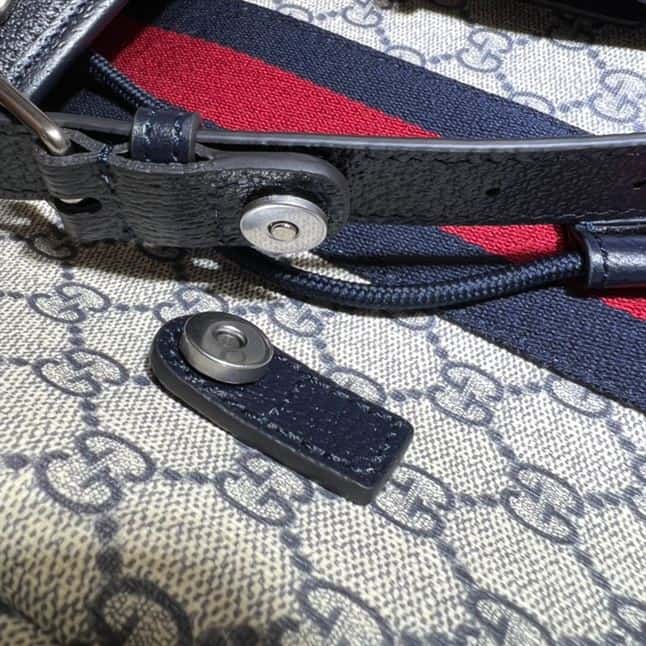
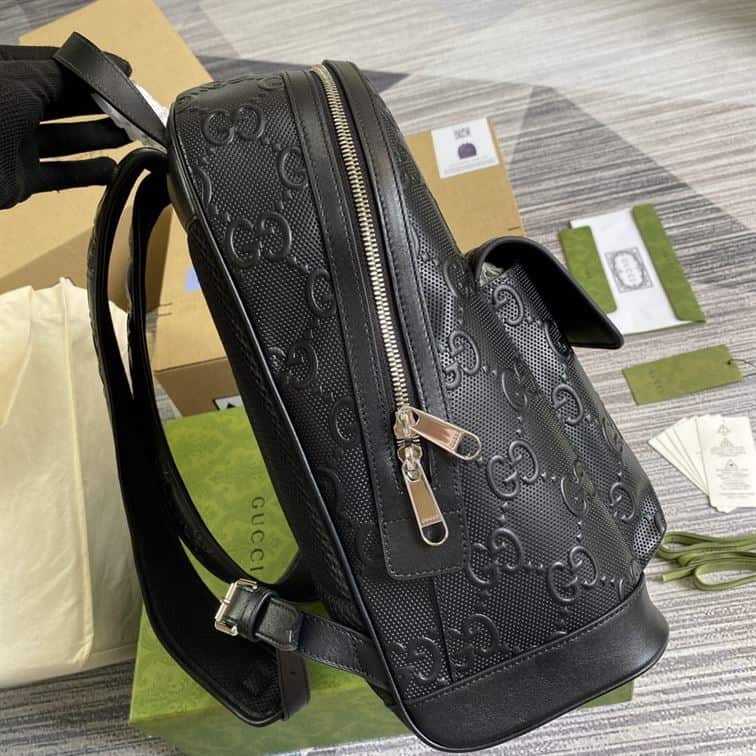
>> Evaluate Hardware Through Operation
● Visual Accuracy vs Everyday Usability
>> Appearance Is Only One Part of the Comparison
>> Match the Bag to Its Intended Use
● Price and Value: When Is a Higher Price Justified?
>> An Illustrative Cost-Per-Use Comparison
● A Practical Evidence Scorecard for Comparing Sellers
● Industry Context: What Current Counterfeit Data Actually Shows
● What Luxurry Edit Should Demonstrate to Earn Buyer Confidence
>> Publish Product-Level Details
>> Explain Quality Control Without Inventing Credentials
>> Make Service Terms Easy to Understand
● Make Your Decision With Evidence, Not Labels
>> Are 1:1 Replica Bags Always Better Than Standard Replica Bags?
>> Does “1:1” Mean the Bag Is Authentic?
>> Can Photographs Prove Handbag Quality?
>> Does a Higher Price Guarantee Better Value?
>> Can Replica Handbags Be Seized by Customs?
>> What Is the Most Useful Question to Ask a Seller?
When comparing 1:1 replica bags vs standard replica bags, the most useful question is not simply which looks closer to a designer original. It is which product offers verifiable materials, dependable construction, practical functionality, and a price that makes sense. A premium label alone cannot establish those qualities.
The short answer is that a bag marketed as a 1:1 replica may offer more detailed finishing than a standard replica, but verification matters more than terminology. Neither description independently proves durability, authenticity, or value.
For Luxurry Edit, this distinction creates an opportunity to explain craftsmanship clearly rather than rely on ambitious promises. This guide examines the differences buyers should investigate, the evidence worth requesting, and the legal considerations that appearance-focused comparisons often overlook.
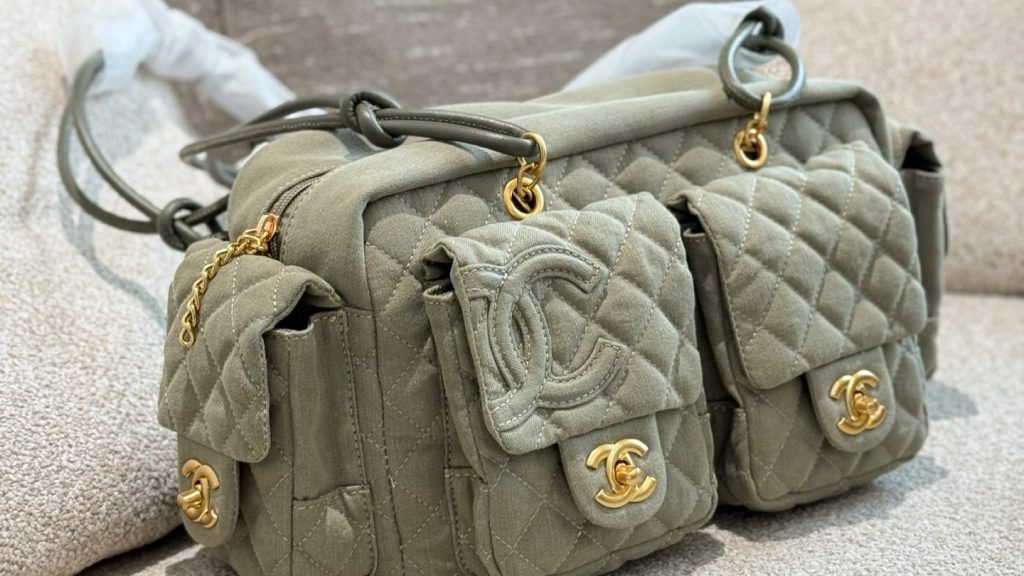
What Are 1:1 Replica Bags and Standard Replica Bags?
What Does “1:1 Replica” Mean?
In marketplace language, “1:1 replica” generally describes a product advertised as closely reproducing another bag’s appearance, proportions, materials, and decorative details.
However, this article does not treat that phrase as an independently verified quality grade. A seller’s description is not a substitute for specifications, inspection records, or testing.
The distinction matters because several separate claims can hide behind one label:
- Visual similarity to a reference design.
- Comparable material composition.
- Similar construction methods.
- Reliable everyday performance.
- Consistency between photographed samples and delivered products.
Evidence supporting one claim does not automatically establish the others. A convincing photograph, for example, cannot demonstrate long-term handle strength.
What Does “Standard Replica” Mean?
“Standard replica” is a broad commercial description rather than a precise product specification. Here, it refers to a lower-priced imitation positioned below a seller’s premium offering.
It should not automatically mean poor construction. Equally, a higher-priced version should not automatically receive a quality advantage.
A meaningful comparison requires information about the individual products—not assumptions about their category names.
Replica, Inspired Design, and Authentic Product Are Different Concepts
A bag marketed as a replica is not an authentic product from the brand being imitated. Calling something “designer-inspired” also does not, by itself, settle whether its trademarks or design features are legally permissible.
For cross-border purchases, this distinction has practical consequences. U.S. Customs and Border Protection warns that counterfeit imports can be seized and that individual consumers may face penalties. Applicable rules depend on the destination and circumstances.
1:1 Replica Bags vs Standard Replica Bags: Comparison Table
The following table identifies what to investigate. It does not represent verified findings about every seller or any specific Luxurry Edit product.
| Comparison area | Bag marketed as a 1:1 replica | Bag marketed as a standard replica | Evidence to request |
|---|---|---|---|
| Positioning | Usually presented as a premium imitation | Usually presented as a lower-cost alternative | Written product specifications |
| Materials | May carry more detailed material claims | May provide fewer material details | Composition and lining information |
| Construction | May promise more refined finishing | May prioritize a lower selling price | Close-up photographs and inspection criteria |
| Appearance | Often emphasizes close visual similarity | May emphasize the general style | Actual-item photographs and measurements |
| Hardware | May advertise upgraded components | May use more economical components | Component specifications and operation video |
| Durability | Cannot be established by the label | Cannot be established by the label | Relevant testing and defect policies |
| Value | Depends on documented improvements | Depends on acceptable trade-offs | Total cost and return conditions |
| Legal exposure | Premium positioning does not remove it | Lower pricing does not remove it | Destination-specific guidance |
Materials: Compare Specifications, Not Luxury-Sounding Language
Ask What the Bag Is Actually Made From
Terms such as “premium leather,” “luxury quality,” and “original-grade material” are incomplete descriptions.
A useful product specification should identify:
- Whether the exterior is leather, coated fabric, or a synthetic material.
- The material used for the lining.
- Any coating or surface treatment.
- Relevant care requirements.
- Which components differ between product tiers.
From a product-evaluation perspective, precise wording is more useful than impressive wording. “Leather exterior with textile lining” gives buyers something concrete to assess. “Exclusive luxury materials” does not.
Photographs can help explain appearance, but buyers should not treat them as independent proof of material composition.
Separate Material Quality From Responsible-Sourcing Claims
Material performance and sourcing credentials answer different questions.
Leather Working Group certification concerns environmentally and socially accountable leather manufacturing within its audit framework. It should not be presented as proof that a finished handbag is authentic, identical to another brand’s product, or guaranteed to last a particular number of years.
For Luxurry Edit, any sourcing claim should identify the relevant supplier, documentation, and scope. Without those records, the responsible approach is to avoid certification claims entirely.

Construction: Look Beyond the Front-Facing Photograph
Inspect the Bag as a Functional Object
A handbag must do more than photograph well. A practical review should examine the areas that carry weight, move repeatedly, or contact clothing.
An inspection checklist can include:
- Handle attachment points.
- Strap connections.
- Seam junctions.
- Opening and closure alignment.
- Interior pocket attachments.
- Edge finishing around frequently handled areas.
These are proposed inspection priorities, not proof that one replica category consistently outperforms another.
The useful question is straightforward: can the seller show how the product is assembled and explain what would count as a defect?
Evaluate Hardware Through Operation
A polished clasp can look convincing in a still image without demonstrating how smoothly it operates.
Ask for a short video showing the actual item opening, closing, and adjusting. The purpose is to assess usability—not to establish authenticity.
Useful questions include:
- Does the closure engage without repeated repositioning?
- Does the zipper move through its full opening?
- Can the strap adjustment be demonstrated?
- Are component limitations disclosed?
A seller who provides clear answers offers more decision-useful information than one who repeats “perfect quality.”
Visual Accuracy vs Everyday Usability
Appearance Is Only One Part of the Comparison
Buyers researching high-quality replica handbags often focus on silhouette, proportions, color, and decorative placement.
Those features may matter to their preferences, but they should remain separate from functional quality. A close visual resemblance does not establish comfort, capacity, repairability, or resistance to wear.
My editorial approach is to score appearance and usability separately. This prevents an attractive exterior from concealing unanswered questions about construction.
Match the Bag to Its Intended Use
Before comparing product tiers, define the job the bag must perform.
For a work bag, check whether the stated dimensions accommodate your actual essentials. For an occasional evening bag, opening access and carrying comfort may matter more than capacity.
Write a short requirements list:
- Essential contents.
- Preferred carrying method.
- Acceptable empty weight.
- Required opening width.
- Desired pocket arrangement.
- Maximum total budget.
This turns an abstract “premium vs standard” decision into a product-fit assessment.
Price and Value: When Is a Higher Price Justified?
A higher price is easier to evaluate when the seller identifies the specific improvements it purchases.
Ask for an itemized explanation of differences in materials, components, construction, inspection, and service. If the only explanation is “higher grade,” the value proposition remains unproven.
Also compare the complete transaction:
- Product price.
- Shipping charges.
- Applicable taxes and duties.
- Return-shipping responsibility.
- Defect remedies.
- Any restrictions on refunds.
Do not assume that paying more creates better consumer protection or removes customs exposure. CBP’s counterfeit guidance applies to the nature of the goods, not the seller’s premium positioning.
An Illustrative Cost-Per-Use Comparison
Suppose one bag costs $120 and receives 40 uses. Its purchase cost per use is $3.
A second costs $300 and receives 150 uses. Its purchase cost per use is $2.
These are hypothetical figures, not measured replica-bag lifespans. Their purpose is to show why purchase price alone is incomplete.
The calculation becomes useful only when realistic usage, serviceability, and additional costs are considered. Without reliable durability evidence, a seller should not promise a lower lifetime cost.
A Practical Evidence Scorecard for Comparing Sellers
Rather than assigning points to unverified “mirror quality,” use a documentation scorecard.
Give each category a score from zero to two:
| Category | 0 points | 1 point | 2 points |
|---|---|---|---|
| Materials | Vague claims | Partial details | Clear component descriptions |
| Product imagery | Generic images only | Some item-specific views | Detailed actual-item documentation |
| Measurements | Missing | Basic dimensions | Dimensions with measurement guidance |
| Inspection | No explanation | General promise | Written inspection criteria |
| After-sales terms | Unclear | Partially explained | Clear written remedies and exclusions |
The maximum score is ten.
This is an editorial comparison framework, not a validated laboratory standard. Its value lies in making missing information visible.
A high score means the seller has provided stronger documentation. It does not establish authenticity, legality, or guaranteed performance.
Industry Context: What Current Counterfeit Data Actually Shows
The OECD and EUIPO’s 2025 report estimates that counterfeit and pirated goods accounted for approximately $467 billion in global trade in 2021, equivalent to 2.3% of global imports. The publication year and the underlying data year are different and should not be confused.
EUIPO identifies clothing, footwear, and accessories such as handbags among the leading counterfeit categories.
These figures explain why enforcement and supply-chain transparency deserve attention. They do not show that premium replicas are more durable than standard replicas, nor do they verify any supplier’s manufacturing claims.
That limitation is important: market-size statistics cannot substitute for product-level evidence.
What Luxurry Edit Should Demonstrate to Earn Buyer Confidence
Luxurry Edit describes itself as an experienced supplier with established production lines and a focus on detailed replication. Those are company-provided statements, not independently verified findings in this article.
The strongest way to support its positioning is to make relevant evidence accessible.
Publish Product-Level Details
Each listing should distinguish documented facts from promotional language:
- Material and lining descriptions.
- Product dimensions.
- Available configuration details.
- Care instructions.
- Actual-item imagery where available.
- Clearly stated limitations.
Avoid absolute promises such as “identical in every way” unless the claim can genuinely be substantiated.
Explain Quality Control Without Inventing Credentials
A useful quality-control explanation states what is inspected, when inspection occurs, and what happens when a product fails.
It should not imply independent certification, laboratory testing, or brand authorization unless supporting records exist.
Likewise, manufacturing experience should be described accurately. Years in business, production capacity, and defect rates should only appear when documented.
Make Service Terms Easy to Understand
Clear communication should continue after the product description.
Buyers should understand how to report a problem, what evidence is required, which remedies may apply, and which costs remain their responsibility.
This is more credible than an unsupported promise of flawless production.
Make Your Decision With Evidence, Not Labels
The better bag is the one whose documented construction, usability, and service terms match your needs. Neither visual similarity nor premium terminology answers every important question.
Before making a purchase decision, ask Luxurry Edit for the specific item’s material description, measurements, detailed photographs, inspection criteria, and written after-sales terms. Review the legal requirements in your destination separately. If essential information remains unavailable, pause rather than treating a marketing label as proof.

Frequently Asked Questions
Are 1:1 Replica Bags Always Better Than Standard Replica Bags?
No. A premium label does not establish superior materials or construction. Compare documented product differences, inspection evidence, and service terms before drawing a conclusion.
Does “1:1” Mean the Bag Is Authentic?
No. In this context, it describes a seller’s claim about similarity. It does not mean the original brand manufactured, authorized, or authenticated the product.
Can Photographs Prove Handbag Quality?
Photographs can document visible details, but they cannot establish every material property or predict service life. Treat images as one part of the evidence, alongside specifications and clearly explained inspection criteria.
Does a Higher Price Guarantee Better Value?
No. Better value requires benefits that matter to the buyer and can be reasonably supported. A higher price without specific, documented improvements is not enough.
Can Replica Handbags Be Seized by Customs?
Yes. U.S. authorities warn that counterfeit imports may be seized and that consumers can face penalties. Do not assume a personal purchase or a small parcel is automatically exempt; check the applicable destination rules.
What Is the Most Useful Question to Ask a Seller?
Ask: “What documented differences justify the price of this product compared with your lower-priced option?” A clear answer should discuss measurable specifications and service—not merely repeat a grade name.
References
1. OECD/EUIPO. Mapping Global Trade in Fakes 2025: Global Trends and Enforcement Challenges. Published May 7, 2025; estimates discussed above concern 2021 trade data. Supports the market-size figures and their methodological context. https://www.oecd.org/en/publications/mapping-global-trade-in-fakes-2025_94d3b29f-en.html
2. European Union Intellectual Property Office. Mapping Global Trade in Fakes 2025. Published May 7, 2025. Supports the discussion of affected product categories, including handbags. https://www.euipo.europa.eu/en/publications/mapping-global-trade-in-fakes-2025
3. U.S. Customs and Border Protection. The Truth Behind Counterfeits. Supports the discussion of counterfeit-import enforcement and potential consumer consequences. https://www.cbp.gov/trade/fakegoodsrealdangers
4. Leather Working Group. Certification. Explains the scope of its leather-manufacturing audit standards. Supports the distinction between sourcing-related certification and finished-product claims. https://www.leatherworkinggroup.com/certification/
Hot Tags: Wholesale Replica Bags, 1:1 Replica Bags Wholesale, Replica Handbag Supplier, Replica Bags Manufacturer, Luxury Replica Handbags Wholesale, High Quality Replica Bags, Designer Inspired Handbags Wholesale, Bulk Replica Handbags, OEM Handbag Manufacturer, Private Label Handbag Supplier